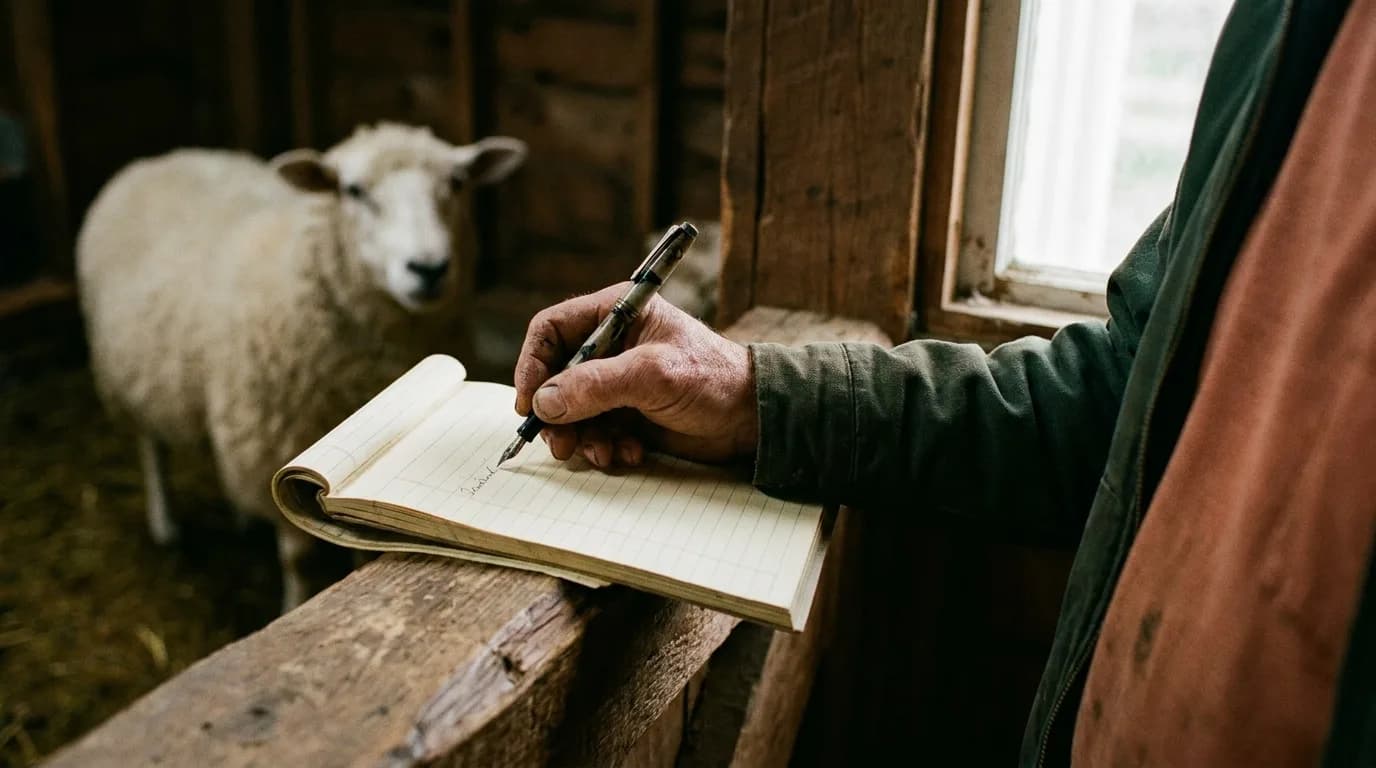
Anyone who treats livestock with veterinary medicines must keep a treatment journal – this is required by the Veterinary Medicines Ordinance (TAMV). The obligation applies to all livestock species, meaning sheep and goats as well as cattle. Entries must include, among other things, the treated animal, the medicine used, the dosage, the date, and the withdrawal period. Records must be retained and produced for inspection.
What entries belong in the treatment journal?
- Date of treatment
- Animal or group of animals (identification, e.g. ear tag number)
- Diagnosis / reason for treatment
- Medicine (name)
- Quantity and dosage
- Withdrawal period for milk and meat
- Person administering treatment and, where applicable, the dispensing veterinarian
How long must records be retained?
Records must be kept for several years (generally at least three years). The exact duration and the mandatory fields are set out in TAMV and in the implementation guidance issued by FSVO.
Why paper becomes a problem
The classic paper journal is a liability at inspection: entries are incomplete, illegible, or the withdrawal period has not been updated. Particularly for organic or IP-Suisse inspections, seamless and traceable documentation is essential.
Keeping records digitally – audit-ready and complete
A digital treatment journal enforces complete entries and automatically calculates the withdrawal period from the medicine used. You can see at a glance which animals are still within the withdrawal period, and you can produce a clean export at inspection time.
That is exactly what Herdy does: treatments are recorded directly against the animal, withdrawal periods are tracked automatically, and the journal can be exported for inspection.