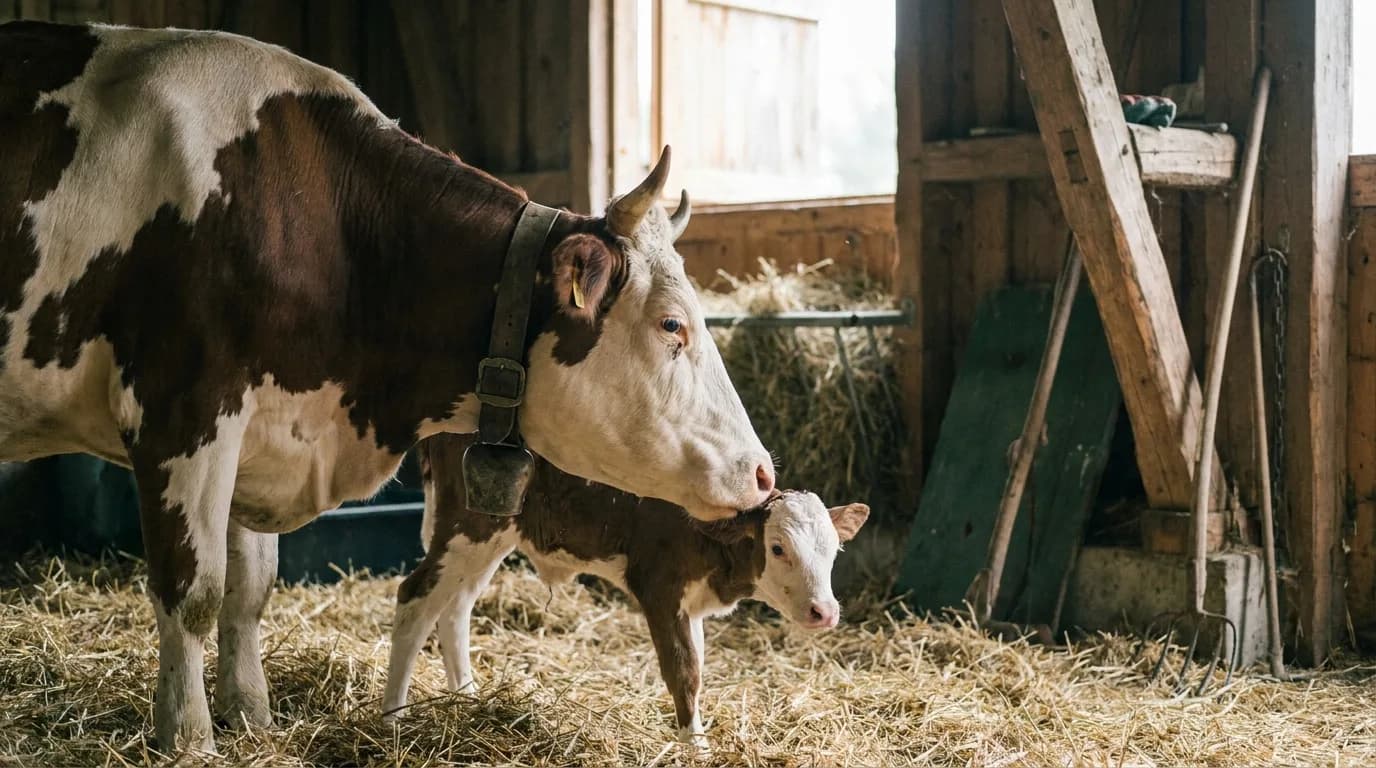
Anyone keeping cattle must notify the TVD of every birth, every arrival, and every departure. Deadlines are based on the event, not the species: report births within 30 days, arrivals and departures (including alpine summering (Sömmerung) drive-up and drive-down) within 3 working days. The only difference between cattle and sheep/goats is the tagging deadline: a calf must receive two ear tags within 20 days of birth (sheep and goats within 30 days; for sheep, one of those must be electronic). Two ear tags and an accompanying document during transport are mandatory for all cloven-hoofed animals.
Which Events Are Notifiable?
- Birth — every calf with ear tag number, dam, sex, and date of birth (deadline: 30 days)
- Arrival — animals coming onto your farm, e.g. purchase or return from the alp (deadline: 3 working days)
- Departure — animals leaving your farm, e.g. sale or change of location (deadline: 3 working days)
- Slaughter — normally notified by the slaughterhouse
- Death / fallen stock — as a departure within 3 working days
Deadline Overview
- Birth: 30 days
- Arrival / Departure: 3 working days
- Tagging the calf (two ear tags): within 20 days of birth
Important: these birth and movement deadlines apply equally to cattle, sheep, and goats. Two ear tags and the accompanying document during transport are also compulsory for all cloven-hoofed animals — the only shorter deadline for cattle is the tagging deadline (20 days instead of 30). For the current requirements, visit tierverkehr.ch or consult FSVO.
Tagging the Calf
Every calf must be tagged with two ear tags within 20 days of birth — or earlier if it leaves the farm of birth beforehand. For more detail, see the guide Reporting a calf birth to the TVD.
Don't Forget the Accompanying Document
When transporting cattle, an accompanying document showing origin, destination, and animal identity must be carried. It is part of the complete traceability chain and is checked during inspections.
Sheep, Goats, and Cattle in One App
Anyone running a mixed farm otherwise juggles multiple systems. In Herdy you record sheep, goats, and cattle in the same app — deadlines are tracked per notification, and pending notifications are shown with reminders on the dashboard. Do you also keep small ruminants? See Reporting sheep to the TVD.